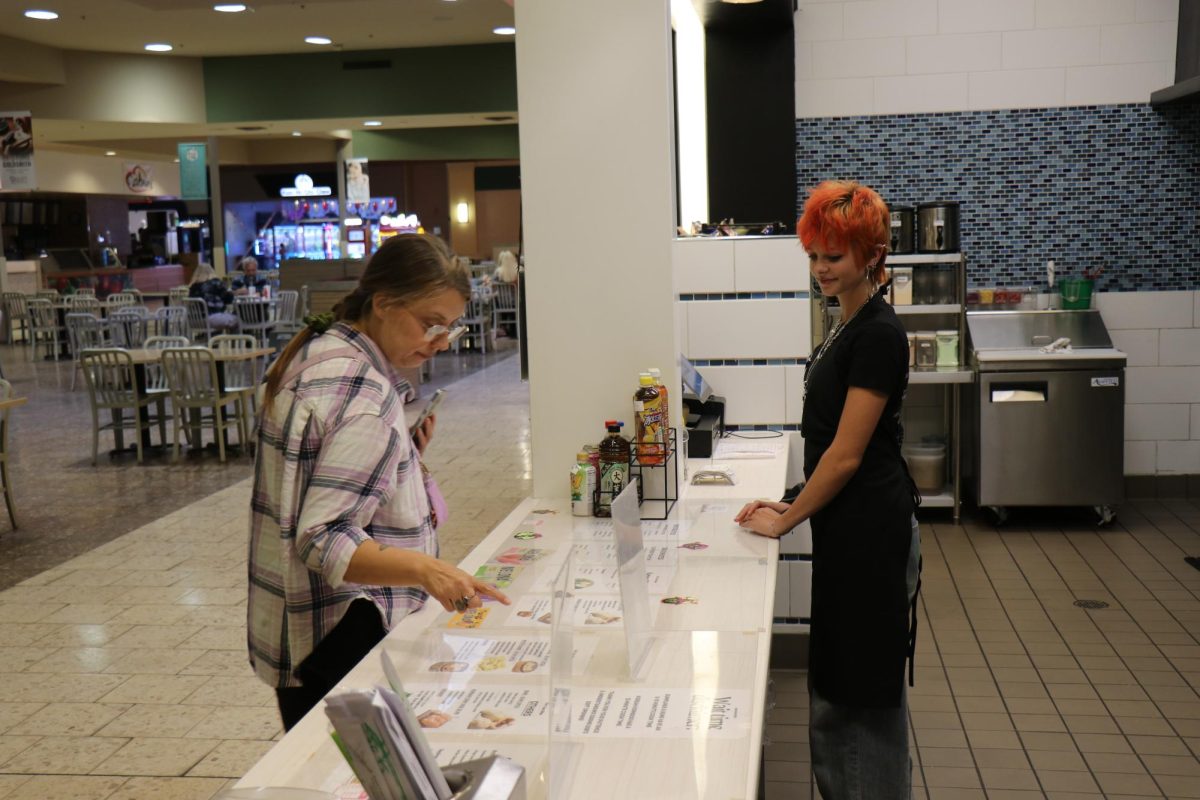
For some Grand Junction High School students, a job is a step toward independence. For others, it’s a critical means of support for their families.
When students work outside of school, they get a taste of the real world. They earn money, take on responsibility, develop a strong work ethic, and learn what it is like to be an adult.
GJHS Work-Based Learning Coordinator Brenda Pomeroy supports students in finding jobs that suit their interests. Pomeroy, who is part of the Career and Technical Education (CTE) and Alternative Cooperative Education (ACE) programs, helps by providing information, assisting with resume writing, letter writing and interview practice.
“My role as the Work-Based-Learning Coordinator is to help 75-100 students per semester connect high school academic learning with community-based experiences,” said Pomeroy.
Students start by looking for jobs that interest them and doing research. Information can include how much the job pays, benefits, and distance from the student’s home or school. Students also find out whether the job they are looking for is hiring new employees.
“I work at Bananas, which is an easy job to get. I turned my resume into them and answered all their questions with honesty and comfort. Being a minor in school while working can be hard sometimes, but having a schedule to help yourself is such a great thing. Honestly, if a student can handle the workload and homework, then they can get a job, but if not, I would not suggest it,” said GJHS senior Trey Wagler.
Most students get jobs to be more independent. They use paychecks to buy food during lunch, fill up cars with gas, purchase clothes, and deposit some of the money into savings, overall spending how they see fit.
According to the Colorado Department of Labor and Employment, the minimum hourly wage is $14.81 or $11.79 for tipped employees. Students are not allowed to work during school hours unless they have a school release permit. Minors also have limits on how many hours they can work on school days.
“Students who have jobs only to support their family aren’t really just supporting, it’s really just an extra hand to help their parents. The biggest effect I’ve seen is that students have to find a balance between providing for their home and schoolwork. It’s a tough spot for parents, students, and workplaces. It is bad that students would miss school, but it’s easy to understand their situation. We just try to support them by getting them the right schedule, or just finding them and getting them the best help. But honestly, the best positivity is that the student is helping their family,” said GJHS counselor Chris Mack.
Students who get jobs to help support their families may use paychecks to help pay for food, rent, and to help their parents take care of basic needs.
“The most positive effect or thing that students learn while working is that there is so much research that students who participate in jobs or extra activities develop great time management skills,” said Mack.
Working students often learn skills that they can carry over to everyday life. They learn time management, work ethic, and taking on responsibility. These skills are useful for school and could be very beneficial if applied to academic learning.