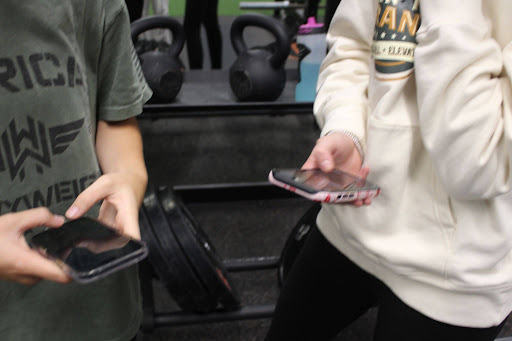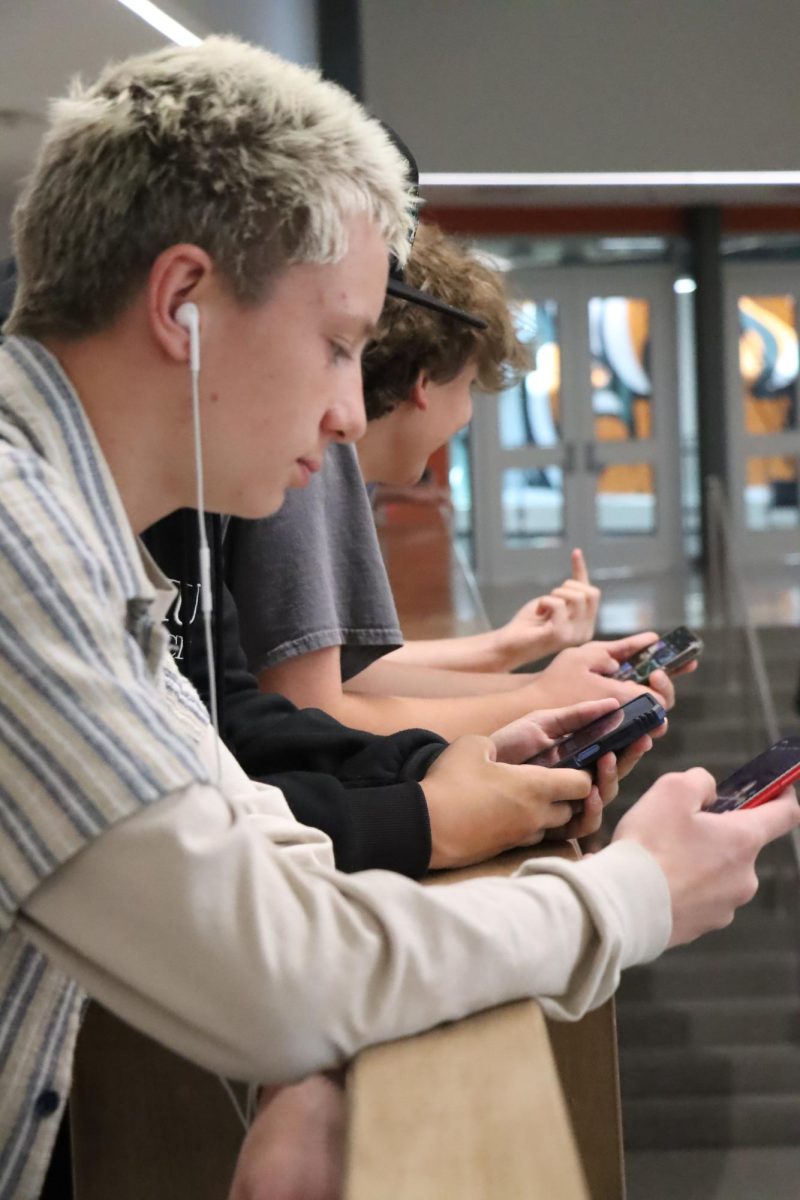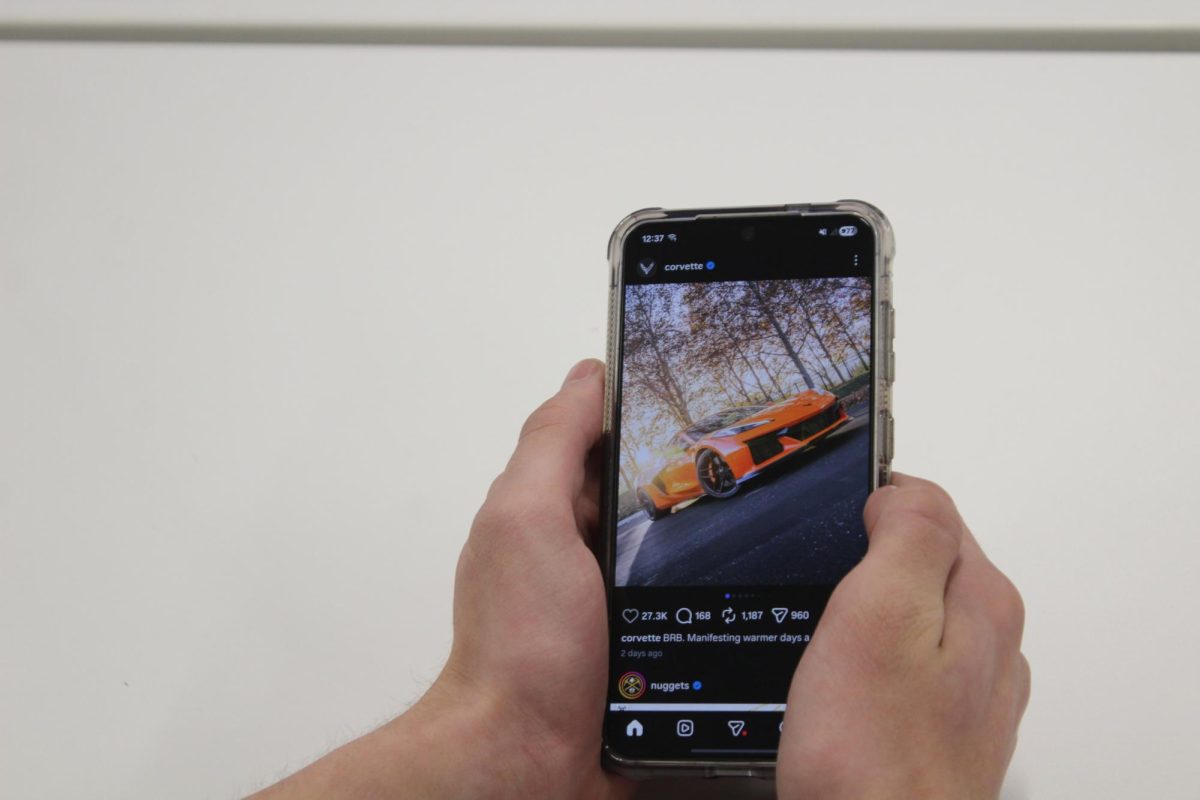
Social media is a large part of student life at Grand Junction High School, but resulting addictions and harm are becoming increasingly present.
Teachers and administrators alike have tried various ways to keep students off their phones, including “Phone Homes” and other measures. One GJHS teacher, Brad Cronk, uses a unique way for students to put their phones away in his classroom. He uses numbers on a caddy assigned to students as a designated spot for their cell phones, which he then checks as a way to record attendance.
“I just want kids to pay attention in class. I want them to pass and to take something out of my class,” said Cronk.
Since February, Meta CEO Mark Zuckerberg has been under fire for allegedly targeting young adults with his platforms, Facebook and Instagram, and for intentionally making them extremely addictive. Zuckerberg retaliated by stating that he thinks “a reasonable company should try to help the people that use its services,” according to the Associated Press. Meta has had over 40 lawsuits filed against it, mainly alleging that the company is intentionally engineering its software to be addictive.
“I don’t believe that Instagram is necessarily bad, but I can see how people find it addicting,” said GJHS sophomore Jackson Zwierzchowski.
Both Meta and Google have been found negligent in another addiction trial, according to the New York Times. Both companies were sued by a young woman for having design features, such as auto scroll and algorithm-based recommendations. Meta will be forced to pay $4.2 million, and Google $1.8 million in damages to the young woman known as Kaley who was affected, according to the BBC.
Studies conducted by multiple universities, such as Stanford, show that dopamine is released whenever people access social media. Dopamine is a chemical that is released in the brain whenever someone has a rewarding or positive experience, which, in primitive times, increased chances of survival and procreation. Nowadays, humans are easily susceptible to dopamine addictions, which are experiences that cause dopamine to be released. Things like social media and short-form content cause the brain to seek out more dopamine, which then leads to a decline in mental health.
GJHS Student Council, sports teams, and other clubs all have social media accounts, including Instagram, to share news about what they have going on and to give students a way to share what goes on around campus. Social media can be an important part of networking at GJHS, but some drawbacks may not always be present while using it.