Many GJHS students would agree that politics are more polarized now than ever, and among many other Americans, they may be hesitant to share their political views.
“I do get the feeling that a lot of people censor themselves in school,” said GJHS junior Donavin Brown.
Despite this, the majority of Americans, especially on the internet, do not appear to be afraid to pick a side.
According to a Gallup poll, “The percentage of Americans identifying as moderate has declined from an average of 43% in 1992 to 34% in 2024,” showing a decrease in people identifying themselves as in-the-middle.
While many GJHS students simply do not care about politics at all, controversial subjects are still occasionally brought up in classes.
“I feel like [politics are] an important subject that should be brought up during conversations more without the fear of making an enemy,” said GJHS senior Benjamin Landry.
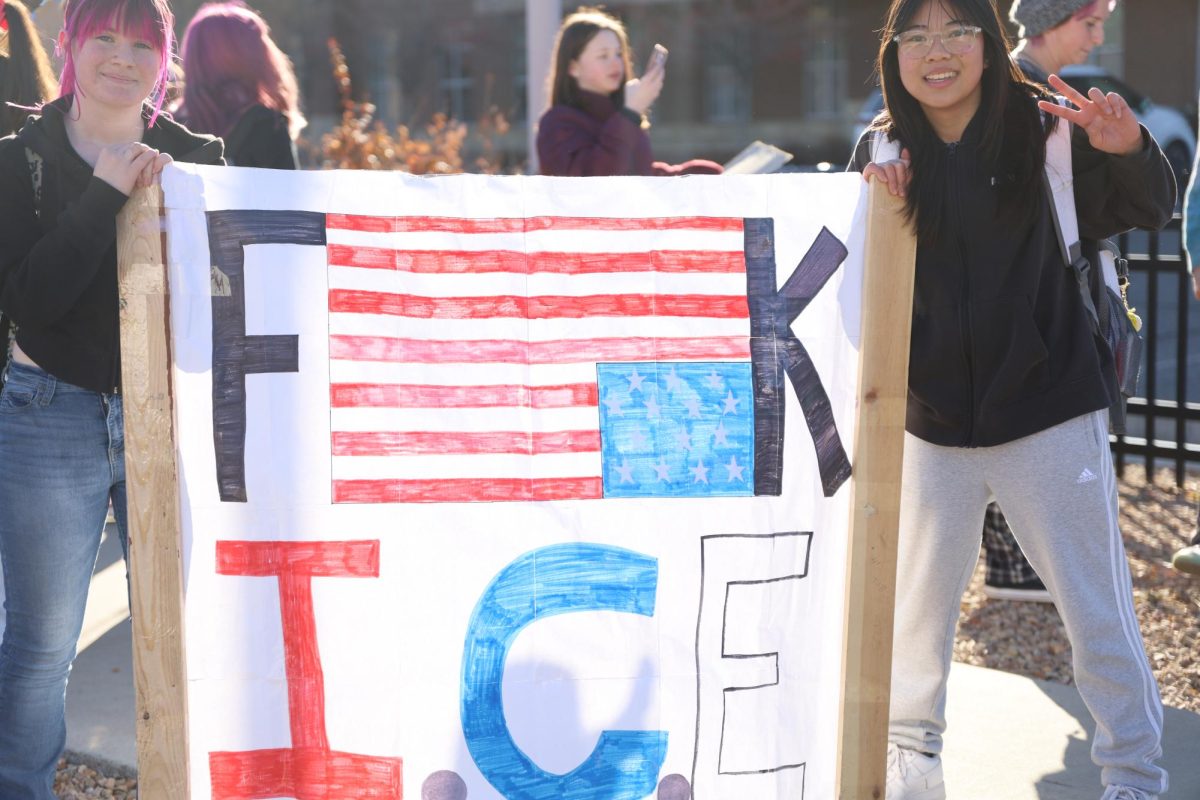
This doesn’t mean that all students are quiet, though. In the modern day, many political issues cannot be avoided. On Jan. 30, GJHS students took part in a walk-out protesting the Trump administration’s immigration policies, which saw over 250 students united against the operations conducted by ICE (Immigration and Customs Enforcement) across America, which have been a topic receiving heavy coverage throughout the news in early 2026.
Of course, not every student agreed with those who protested. Many stayed in class because they did not share the same beliefs as the students walked out. This makes it safe to say that GJHS students, among the rest of Americans, are polarized.
“We have seen amongst the American public a significant increase in one not only affiliating with your own opinion, a high opinion of their own political party, but a dislike — a distrust — whatever that word is for the out-party, the other political party,” said Colorado Mesa University political science professor Justin Gollob.
This so-called “effective polarization” is not the only type of polarization that the United States has seen an increase in during the past few years. Elected representatives have become more polarized as well.
According to Gollob, “Conservative Republicans and liberal Democrats have moved further away from that midpoint in how they cast their votes in congress.”
This is due to an increased focus surrounding social issues like LGBTQ+ rights and abortion in modern politics. “It has been an almost ‘restructure’ around political parties around ideology,” Gollob said.
Naturally, this has been heavily influenced by new innovations like social media. Since the 2016 election, there has been a significant change in how both the Democratic and Republican parties operate. This is not just polarization among GJHS students, but Americans as a whole.